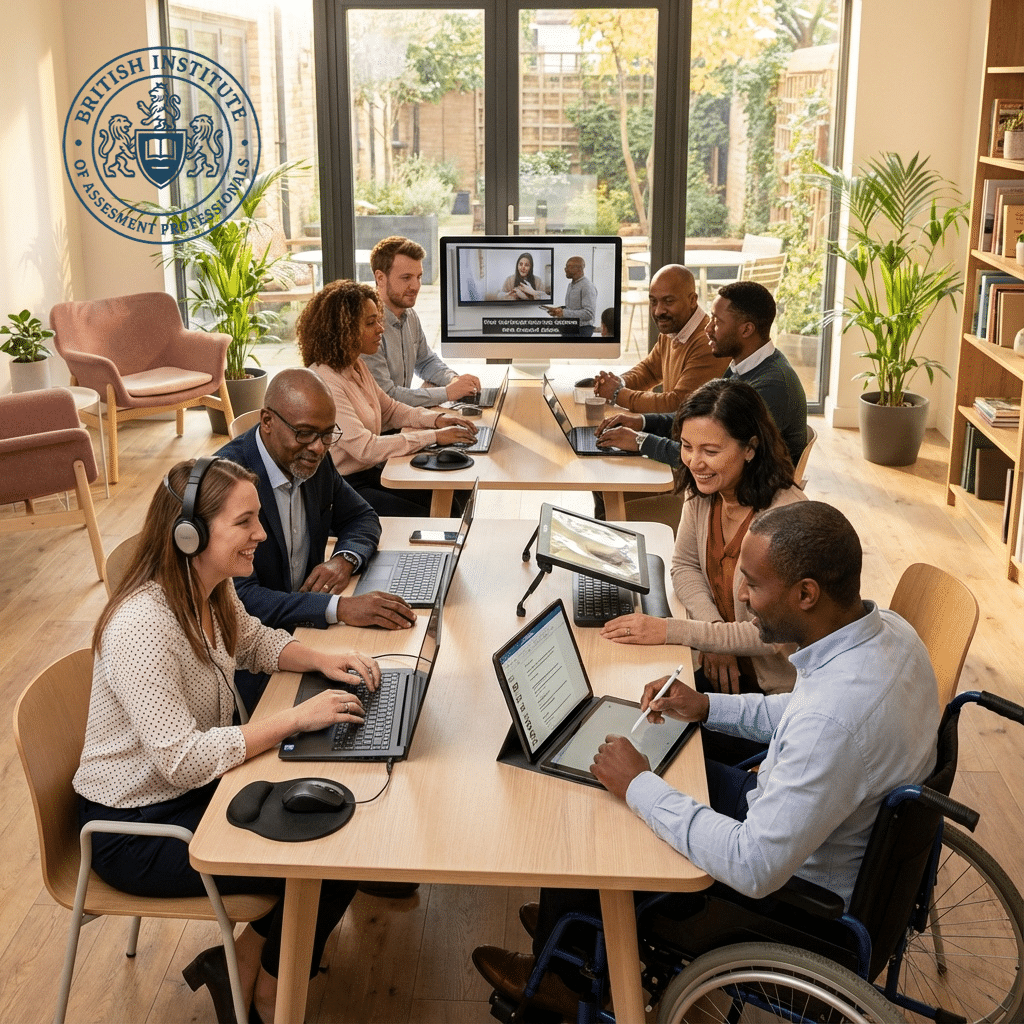
Description
Course Overview
Supporting Learners with Additional Needs in Online Education is a comprehensive 1-hour CPD course designed for assessors, educators, and training professionals who deliver online learning. This accessible e-learning programme provides practical strategies for creating inclusive digital education that supports learners with visual impairments, hearing loss, dyslexia, autism, EAL needs, and other additional requirements.
Why Inclusive Online Education Matters
With over 2 million people in the UK living with visual impairments and 11 million experiencing hearing loss, accessible online education isn’t optional—it’s essential. Legal requirements under the Equality Act 2010 mandate reasonable adjustments for disabled learners, and proactive accessibility design benefits all students.
Research shows that Universal Design for Learning improves outcomes for all learners, not just those with identified additional needs. By removing barriers in online education, you create better learning experiences that increase engagement, retention, and achievement across your entire student cohort.
What You’ll Learn
Universal Design for Learning (UDL) Principles
Master the three core UDL principles to create flexible online courses that work for all learners from the start. Understand how to design multiple means of engagement (the “why” of learning), representation (the “what” of learning), and action & expression (the “how” of learning) in your digital teaching practice.
Supporting Learners with Visual Impairments
Discover practical techniques for supporting learners with visual impairments in online education. Learn to create screen reader-accessible content, write effective alternative text for images, design high-contrast materials, and maintain consistent navigation structures. Understand how to adapt assessment environments and provide extended time accommodations.
Supporting Learners with Hearing Impairments
Implement effective strategies for learners with hearing loss. Learn the importance of video captioning and transcripts, understand visual communication techniques, and discover how to adapt professional discussions and assessments to ensure full participation for deaf and hard-of-hearing learners.
Accessible Online Assessment Strategies
Transform your assessment practice with practical strategies for adapting observations, professional discussions, projects, and assignments. Learn how to provide extended time, alternative formats, and assistive technology support while maintaining academic integrity and accurately measuring learner competence.
Supporting Learning Differences: Dyslexia, Dyspraxia & Autism
Apply evidence-based strategies for learners with dyslexia, dyspraxia, and autism spectrum conditions. Discover how text-to-speech software, colored overlays, simplified interfaces, and predictable structures can support diverse learning needs. Learn to create sensory-friendly content and provide clear expectations.
EAL (English as an Additional Language) Learner Support
Develop culturally responsive teaching practices that support multilingual learners. Understand barriers EAL learners face, including language complexity, cultural differences, and technical vocabulary. Learn practical strategies for providing translation support, visual aids, and language-sensitive assessment adaptations.
Assistive Technology Tools Overview
Explore essential assistive technologies, including screen readers (NVDA, JAWS, VoiceOver), text-to-speech software, speech recognition programs, and visual accessibility tools. Understand how learners use these technologies and how to ensure your content works effectively with them.
Creating Accessible Digital Content
Learn practical techniques for creating accessible text documents, images, videos, and interactive elements. Understand the importance of proper heading structure, color contrast, alternative text, captions, and keyboard navigation in online learning materials.
Course Content Modules
Module 1: Understanding Additional Needs in Online Education
Explore the spectrum of additional needs, including sensory impairments, learning differences, physical disabilities, mental health considerations, and language barriers. Understand the digital divide and accessibility barriers in e-learning platforms.
Module 2: Universal Design for Learning Principles
Deep dive into UDL’s three core principles: multiple means of engagement (the “why”), representation (the “what”), and action & expression (the “how”). Learn neuroscience-based approaches to inclusive course design.
Module 3: Supporting Specific Learning Needs
Practical strategies for supporting visual impairments, hearing loss, dyslexia, dyspraxia, autism, and EAL learners. Includes assistive technology recommendations and real-world implementation examples.
Module 4: Practical Implementation Strategies
Master accessible content creation using WCAG guidelines, adapt assessment methods for diverse needs, and integrate accessibility technology tools into your learning management system.
Module 5: Creating Inclusive Learning Environments
Build supportive online communities, understand legal and ethical requirements, and develop continuous improvement practices for sustainable, inclusive education.
Who Should Take This Course?
- Assessors delivering Level 3 CAVA, TAQA, or A1 Assessor qualifications
- Online Teachers & Tutors in further education, higher education, and adult learning
- IQAs (Internal Quality Assurers) monitoring inclusive assessment practices
- E-Learning Designers creating accessible digital courses
- Training Providers developing inclusive vocational education programmes
- Learning & Development Professionals supporting workplace learning
- Educational Managers implementing accessibility policies
Course Features
Professional Development
- 1-hour CPD-accredited course counting toward annual CPD requirements
- Completion certificate for professional portfolio
- Evidence of commitment to inclusive education practice
Frequently Asked Questions
Q: Do I need any prior knowledge of accessibility? No prior knowledge required. This course is designed for educators at all levels, from those new to accessibility to experienced practitioners wanting to update their knowledge.
Q: Will I receive a CPD certificate? Yes, upon completion, you’ll receive a CPD certificate confirming 1 hour of professional development in inclusive online education.
Q: Is the course itself accessible? Absolutely. Our course platform meets WCAG 2.1 AA standards and includes screen reader support, full transcripts, captions, keyboard navigation, and high contrast options.
Q: Can I use this for my TAQA or assessor qualification CPD requirements? Yes, this course counts toward CPD requirements for TAQA, CAVA, A1 Assessor, and IQA qualifications.
Q: What technology do I need? Any device with internet access (computer, tablet, or smartphone). The course works with all major browsers and operating systems.


Reviews
There are no reviews yet.